Wardogs Season 2 rain changes everything and here is how to survive the new weather
Need articles like this for your video? They help promote it on YouTube and Google — order them in the Telegram bot @sat_sit_bot. It writes articles around your video, embeds the video and publishes them on popular niche websites (no ads). Free trial — 50 articles.
· based on the channel shroud
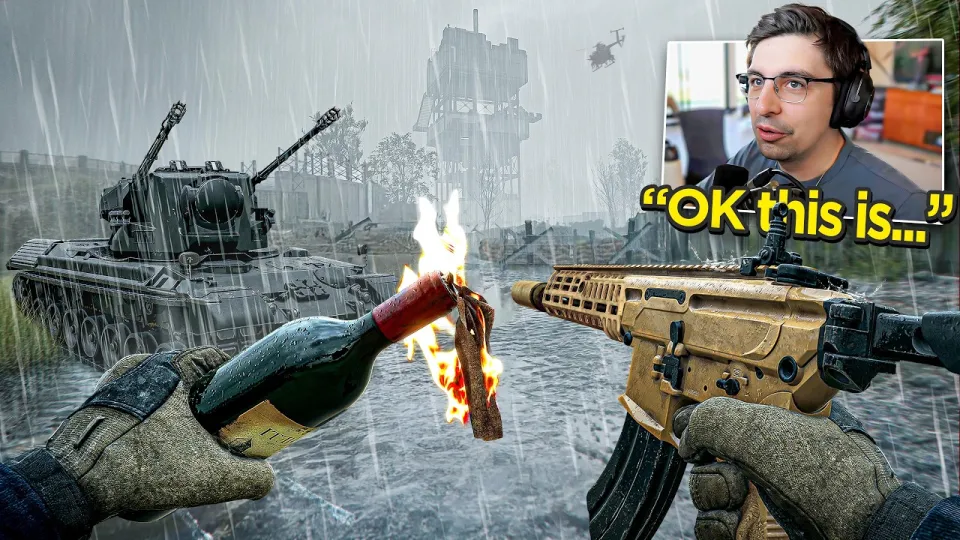
Wardogs Season 2 has turned rain into a real tactical variable, and the game now plays very differently from the dry-weather version players learned. Visibility drops, long-range duels fall apart, and raids shift toward close-quarters fights inside buildings and around bridges. If you want to keep your survival rate up, you have to change how you rotate, what optics you carry, and where you take fights — and you can follow along with the full session through the shroud podcast feed on Spotify.
What the rain actually changes in Wardogs Season 2
The rain is not a cosmetic overlay: it reduces how far you can reliably identify and track targets, so fights that used to start at distance now start at knife range. Players report that even around 190 meters it becomes hard to see anything clearly, which means the long sightlines across open ground and bridges lose most of their value. The practical consequences stack up quickly:
- Sniping becomes inconsistent. A scoped rifle still fires, but confirming a target through rain at range is a gamble, and misses give away your position.
- Rotations slow down. Crossing open terrain without visibility means more ambushes from players holding angles you cannot see.
- Indoor and structure fights increase. Buildings, towers and stairwells become the default battleground because the weather does not matter inside.
- Sound matters more. With eyesight degraded, footsteps and gunfire direction become the primary information source.
- Weather-aware gear wins. Anything that improves target acquisition in low visibility gains disproportionate value.
Optics and gear that hold up in bad weather
Infrared and thermal optics are the single biggest quality-of-life upgrade once rain rolls in, because they restore target detection in conditions where the naked eye fails. Treat them as mandatory rather than luxury: if your build cannot mount a low-light sight, you are fighting the weather and the enemy at the same time. Beyond optics, the priorities shift toward gear that supports short, brutal engagements — compact rifles with controllable recoil, plenty of magazines, and armor that lets you survive a stairwell trade. Shotguns and submachine guns become far more attractive than they are in clear weather, since most of your kills will happen inside 50 meters anyway.
Why leg shots and HP ammo decide armored fights
Against heavily armored opponents, center-mass fire is often wasted, and the reliable answer is HP ammunition aimed at the legs. The pattern shows up constantly in high-level play: a player is told to shoot legs, acknowledges it, then empties a magazine into the torso and head, does no meaningful damage, and concludes the weapon is terrible. It is not the weapon — it is the hit location and the ammo type. Two rules fix this:
- Check whether your gun is loaded with HP rounds before you complain about damage output; standard rounds against class-4-plus armor will feel worthless.
- Aim low. Legs are frequently unarmored or lightly armored, and damage there bypasses the plate entirely.
A weapon like the PP-19 with the right ammunition can drop armored players quickly; the same gun with the wrong rounds feels like a peashooter. Ammo selection is a bigger damage multiplier than the gun itself.
Positioning, bases and the 20-player problem
A squad of six on comms will lose to a loose group of twenty if that group fortifies a position, and rain makes fortified positions even stronger. Large player counts mean multiple independent groups converge on the same landmarks, and a well-built base in a tower or on a ridge becomes a fortress that costs far more to take than to hold. Practical adjustments:
- Scout structures before entering. If a building has been reinforced, assume multiple defenders and pre-fire the angles.
- Never open your inventory mid-fight. Repacking magazines while falling or standing in a doorway gets you killed by the same player who just shot you.
- Use the weather to break contact. Rain hides retreats as effectively as it hides attackers.
- Consolidate with your squad. Six players making synchronized callouts beat twenty strangers, but only if you actually push together instead of trickling in one at a time.
Common mistakes players keep making
Game sense degrades faster than aim when visibility drops. The most frequent errors in rainy raids are opening inventory in the middle of an active fight, pushing a building where you were just shot from without clearing the angle first, and calling for help only after you are already down. Another recurring problem is ego peeking at low HP: fighting at 10 HP, then 3 HP, then 1 HP works until it does not. Recoil control also matters more than usual, because engagements happen at close range where a missed spray is fatal — a reminder that mechanical consistency separates good players from great ones. Finally, do not assume rain means safety; it slows your own rotations just as much as your opponent's.
Where to follow the full Wardogs sessions
All the official channels tied to the stream are collected here for convenience:
The bottom line on Wardogs Season 2 rain
Rain does not just change the view — it changes which fights are worth taking, which weapons are worth carrying, and how much a fortified position is worth. Sniping loses reliability past roughly 190 meters, low-light optics become close to essential, and leg shots with HP ammo remain the most consistent way to kill armored opponents. Adapt by fighting indoors, rotating with your squad, and never opening your inventory in a live engagement. The session that prompted this breakdown comes from the shroud channel, where the full rainy-weather raid is worth watching for the pacing alone — and if you want more of that content in audio form, the Spotify show is the easiest way to keep up.
Key takeaways
- Wardogs Season 2 introduced heavy rain as a dynamic weather condition that appears during raids.
- Rain cuts visibility to the point where spotting targets around 190 meters becomes unreliable.
- Sniping is the playstyle hit hardest, while close-range and indoor fights become more common.
- Infrared and thermal optics gain value in rain because they cut through the reduced visibility.
- HP ammunition aimed at the legs is the reliable answer to heavily armored opponents.
Source: Wardogs Is a Completely Different Game Now... · Markdown version
Questions & answers
Does rain in Wardogs Season 2 make sniping useless?
Not useless, but unreliable. Visibility degrades enough that even around 190 meters targets are hard to identify and track, so scoped rifles lose their consistency. Sniping still works at medium range and from elevated positions, but you should not build a raid plan around long sightlines in bad weather.
Why does my gun do no damage to armored players in Wardogs?
The most common cause is ammo type and hit location. Standard rounds struggle against high-tier plates, so switch to HP ammunition and aim at the legs, which are usually unarmored. The same weapon that feels terrible with the wrong rounds kills quickly with the right ones.
Are infrared or thermal optics worth using in the rain?
Yes. Low-light and thermal optics restore target detection exactly when the naked eye fails, which makes them far more valuable in rain than in clear weather. If your build can mount one, it is one of the highest-value upgrades available for rainy raids.
How do you deal with large groups holding fortified bases in Wardogs?
Scout the structure before committing, assume multiple defenders, and push with your whole squad at once rather than trickling in. A coordinated six-player group on comms can beat a larger disorganized force, but only with synchronized callouts and pre-fired angles.