What to Watch in PRX vs LOUD at VALORANT Champions Shanghai and Why the Playoff Style Clash Matters
Need articles like this for your video? They help promote it on YouTube and Google — order them in the Telegram bot @sat_sit_bot. It writes articles around your video, embeds the video and publishes them on popular niche websites (no ads). Free trial — 50 articles.
· based on the channel VALORANT Champions Tour
PRX vs LOUD at VALORANT Champions Shanghai is best read as a clash of systems rather than a clash of superstars: LOUD's trade-heavy, structurally disciplined style is the better fit for playoff VALORANT, while PRX's aggressive, duel-first approach keeps producing leads it cannot hold. That is the short answer to why this playoff series became one of the most discussed matches of the event, and the full picture is worth unpacking for anyone following the VALORANT Champions Tour. Official updates and clips from the event are posted by VALORANT Esports on X.
What the PRX vs LOUD playoff match actually was
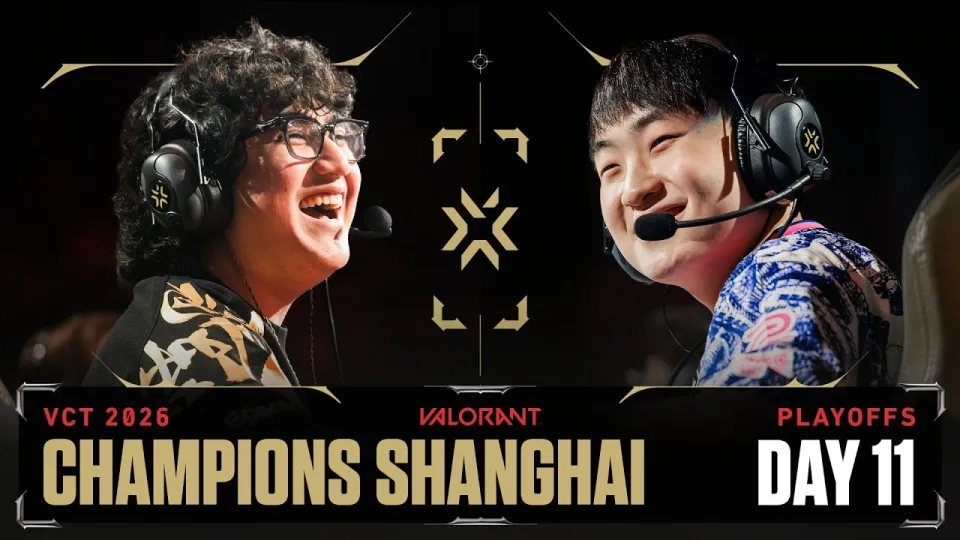
This was a playoffs-stage series at VALORANT Champions Shanghai, the year's biggest VALORANT trophy and the close of a 16-team season finale drawing from Americas, CN, EMEA and Pacific. The tournament window ran from September 24 to October 18, and the match was published as Day 11 of the playoffs stage on the VALORANT Champions Tour channel. The broadcast's own framing is useful context: the season was described as one where new contenders emerged, expectations broke, and two different Masters events produced two different champions. Shanghai was set up as the place where all of that converged, with familiar names and a fearless new generation fighting for the same trophy.
For a viewer arriving without context, the practical takeaway is that this is not a group-stage formality. Playoffs VALORANT at Champions compresses everything: map vetoes matter more, pistol rounds swing series, and teams that rely on individual hero plays get punished by opponents who trade every kill.
Why PRX's leads kept disappearing
The central criticism of PRX in this match is that the team built large advantages on both maps and lost them anyway, which is the pattern fans have come to expect rather than an isolated collapse. The most detailed viewer breakdown of the series argued that PRX could have closed LOUD out 2-0, and that a similar script had already played out earlier in the event when a 9-3 lead was surrendered. The diagnosis offered was not mechanical skill but discipline: unnecessary 1v1 duels, a habit of defaulting to raw aggression instead of sticking to fundamentals, and a persistent willingness to put themselves in winnable positions and then hand them back.
The comparison that makes the point land is with teams like NRG and 100T, whose structure is cited as the reason they convert advantages into trophies. In practical terms, that means:
- Taking duels only when a teammate can trade the kill.
- Slowing default rounds instead of forcing early contact without information.
- Converting post-plant and man-advantage situations with utility rather than aim duels.
- Resetting economy decisions around the team's win condition, not an individual's confidence.
None of that is exotic. It is the baseline that separates a team that reaches playoffs from a team that wins them.
How LOUD's trade-first structure flips the matchup
The reason LOUD capitalizes on those lapses is structural: their rounds are built around trade kills, which makes their engagements feel fearless because every entry has a follow-up. When a team plays as a five-man unit with a second player always ready to avenge a death, an opponent that isolates into 1v2, 1v3 and 1v4 situations is effectively donating rounds. That is exactly the dynamic viewers described in this series — LOUD trading cleanly while PRX repeatedly found itself outnumbered in the fights that decided maps.
This also explains why the LOUD result was read by many as a statement rather than an upset. A trade-based team does not need to out-aim anyone; it needs the other side to take bad fights, and PRX's style supplies those voluntarily.
What this result says about the Shanghai title race
Community reaction to the series treated it as a signal about the wider bracket rather than a single elimination. The most common finals predictions centered on Americas teams, with LOUD and 100T appearing most often and several viewers calling a LOUD vs 100T final, including one specific 3-1 call. Others floated NRG as a third Americas threat, and one popular joke imagined all three winning simultaneously because the matches would never end. Whether or not those predictions hold, the underlying read is consistent: the Americas region's structured, trade-heavy style looked like the most reliable path through the playoffs bracket.
For PRX, the fallout was the familiar mix of frustration and loyalty. Long-time supporters described being used to the pattern, while others noted the pick'em damage and demanded the team win the whole thing to make up for it. That is a real fan experience worth naming: following a high-ceiling roster means accepting that the ceiling and the floor arrive in the same series.
The recurring questions around PRX and how to think about them
Every PRX playoff run produces the same arguments, and this one is no exception. The productive version of the debate separates three things that get blended together. First, ceiling: PRX's aggression generates leads against elite opponents, which is evidence of real quality, not luck. Second, consistency: leads that evaporate across multiple maps and multiple events point to decision-making under pressure, not to a single bad round. Third, coaching: if the pattern repeats, the fix has to come from preparation and in-game calling, because players default to habits when the structure is thin.
A useful way to judge the next PRX series is to watch what happens in the first two rounds after a timeout. Teams with discipline come out with a set play and a clear economy plan. Teams relying on instinct come out hunting a highlight.
Useful links
- VALORANT Esports on X — official announcements and results
- VALORANT Esports on Facebook
- VALORANT Esports on Instagram
- VALORANT Esports on TikTok
- VALORANT on Twitch
The bottom line on PRX vs LOUD
This series is a clean case study in why playoff VALORANT rewards structure over firepower: PRX created the advantages, and LOUD converted them by trading every duel and refusing to give away free rounds. The match also fits the broader Shanghai story of a season where new contenders broke expectations and the Americas region looked like the deepest source of title-ready teams. The full broadcast, published as Day 11 of the playoffs stage, is available from the VALORANT Champions Tour channel, and it is the best source for the round-by-round detail this breakdown summarizes. For schedules, results and official clips, follow VALORANT Esports on X.
Key takeaways
- PRX and LOUD meet in the playoffs stage of VALORANT Champions Shanghai, the 16-team world championship running September 24 to October 18.
- The match aired on the VALORANT Champions Tour channel as Day 11 of the playoffs stage.
- Viewers repeatedly frame PRX's problem as discipline: big leads on both maps slipped away against LOUD.
- LOUD's trade-based, fearless structure is the contrast most fans point to when explaining the result.
- Americas teams dominate the community's finals predictions, with LOUD and 100T named most often.
Source: PRX vs. LOUD — VALORANT Champions Shanghai — Playoffs Stage — Day 11 · Markdown version
Questions & answers
Did PRX really throw both maps against LOUD?
Viewers who tracked the series argue PRX held large leads on both maps and lost them, which is why the result felt self-inflicted rather than a straightforward loss. The recurring explanation is a lack of discipline in duel selection and round structure, not a gap in mechanical skill. Treat it as a pattern across the event rather than a single bad map.
What does 'trade-heavy' actually mean in LOUD's playstyle?
It means every engagement is designed so a teammate can immediately avenge a death, turning a 1-for-1 into an advantage. That structure makes entries feel fearless because the follow-up is already positioned. Against a team that isolates into 1v2 or 1v3 fights, trading converts those mistakes into round wins.
Why do fans keep predicting an all-Americas final?
The community read after this series was that the Americas region's structured, trade-first teams looked the most reliable in the playoffs bracket, with LOUD and 100T named most often and NRG floated as a third threat. Those are predictions, not results, and the bracket still has to be played out.
Where can I watch the full PRX vs LOUD match?
The complete broadcast is published on the VALORANT Champions Tour YouTube channel as Day 11 of the playoffs stage at VALORANT Champions Shanghai. Official results, clips and schedule updates are posted through VALORANT Esports social channels, including https://x.com/valorantesports.